
Dental Bridges
Dental Bridges to Replace Missing Teeth
Fill the gap with fixed dental bridges that restore function and appearance, affordable & long-lasting.
Starting at Rs. 7500
When Do You Need a Dental Bridge?
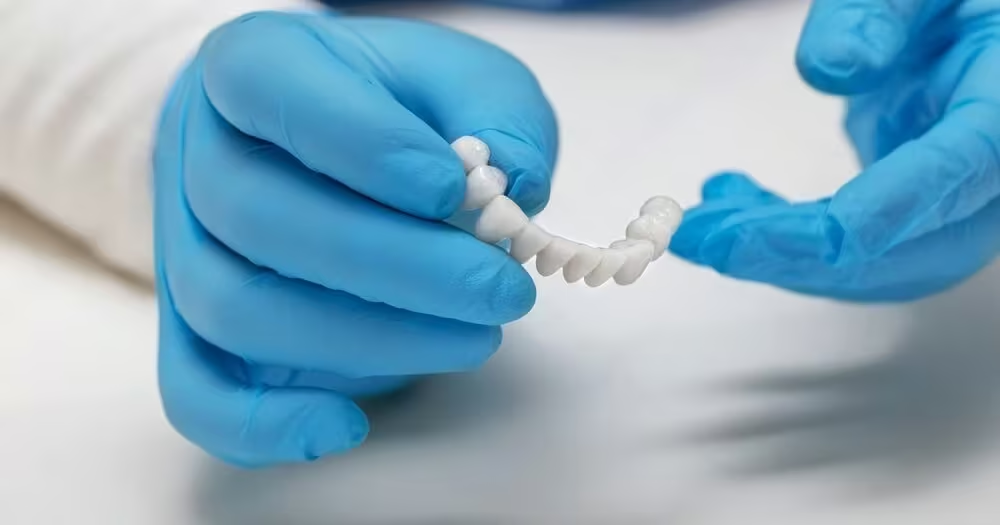
Dental bridges are used to replace one or more missing teeth, but not everyone is a suitable candidate. To determine if a dental bridge is right for you, your dentist will conduct an initial oral examination along with radiographs. Ideal candidates for dental bridges are those who are missing one or more permanent teeth, do not have serious medical conditions, infections, or other health problems, and have healthy surrounding teeth with a strong bone structure to support the bridge. Additionally, good oral health and the ability to perform proper oral hygiene practices are essential to maintain the condition of the dental bridge.
Types of Dental Bridges
There are four main types of dental bridges, each designed to address specific dental needs:
Traditional Dental Bridge
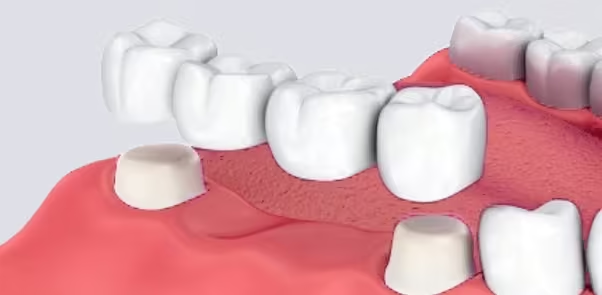
A traditional dental bridge consists of a false tooth or series of teeth held in place by dental crowns cemented onto abutment teeth on either side. It is widely used when there are healthy natural teeth on both sides of the gap.
Cantilever Dental Bridge
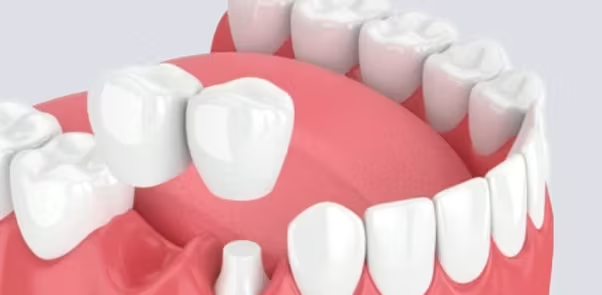
Similar to a traditional bridge but supported only on one end, a cantilever bridge is bonded to a crown on one side, allowing the artificial teeth to extend over the gap. It is used when natural teeth are present only on one side of the gap.
Maryland Dental Bridge
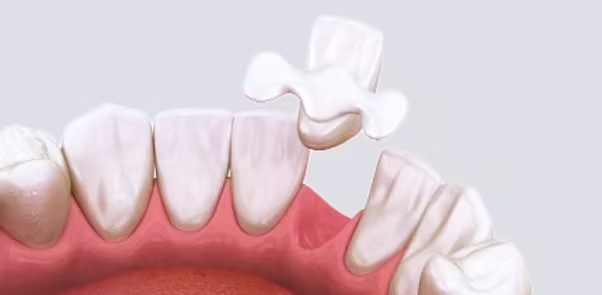
Also known as resin-bonded bridges, these use metal wings instead of crowns to secure the bridge. The wings are bonded to the back of your neighboring teeth and are used primarily for front teeth due to their design.

Implant-Supported Bridge
This type of bridge is supported by dental implants rather than adjacent teeth. It is recommended when there are three or more missing teeth in a row, providing a sturdy and long-lasting solution.
Pros and Cons of Dental Bridges
Dental bridges are a popular solution for replacing missing teeth, offering several benefits while also having some potential drawbacks.
Benefits of Dental Bridges
- Bridges restore your smile with a natural appearance.
- Helps you eat comfortably without difficulty.
- Stops nearby teeth from moving out of place.
Risks of Dental Bridges
- Damage to support teeth may weaken the bridge.
- Weak support teeth may crack or break over time.
- Poor cleaning can cause plaque and gum disease.
Dental bridges can be a great long-term option for replacing missing teeth, but proper care and regular dental checkups are essential to maintaining their durability and effectiveness.
Comparison of Dental Bridges and Implants
| Comparison | Dental Bridge | Dental Implant |
|---|---|---|
| Lifespan | Semi-permanent, can last a very long time. | Needs replacement every 5-10 years. |
| Masticatory Force | Weaker chewing force due to lack of a dental root. | Same chewing force as a natural tooth. |
| Treatment Cost | Less expensive initially. | Initially expensive but economical in the long run. |
| Treatment Period | Has a shorter treatment period. | Takes about 3-6 months to complete. |
| Tooth Damage | Requires shaving down healthy adjacent teeth. | No damage to adjacent teeth. |
| Procedure | Shaving down adjacent teeth and making three teeth into one to fill the gap. | Planted inside the bone at the missing tooth site. |
Dental Bridge Procedure
The basic procedure for placing a dental bridge involves putting crowns on the teeth on either side of the gap. These supporting crowns are connected by another crown that acts as a false tooth to fill the gap of the missing teeth.
The process of getting a dental bridge includes several steps and may require multiple dental visits:
Stage-1 Initial Examination
Our dentist will thoroughly examine your mouth using clinical methods and X-rays to assess the health of your teeth and gums.
Stage-2 Treatment of Issues
If any tooth decay or gum disease is found, it will be treated first to ensure a healthy foundation for your dental bridge.
Stage-3 Measuring and Checking
Your surrounding teeth and mouth will be measured and checked to ensure they are strong enough to support the dental bridge.
Stage-4 Preparing the Teeth
Teeth on either side of the gap will be filed down to prepare for the dental bridge. An impression will be taken to create a mold for the bridge.
Stage-5 Temporary Bridge
A temporary bridge might be given while you wait for the permanent bridge. This supports and protects the tooth structures.
Stage-6 Permanent Bridge Placement
The final step involves fixing the permanent bridge in place using dental cement, ensuring a secure and lasting fit.
Do’s and Don’ts for Dental Bridges
Do’s
- Regular dental visits for checkups and cleanings.
- Brush twice and floss daily for proper hygiene.
- Use threaded floss and small brushes for cleaning.
- Eat soft foods initially to help the bridge settle.
Don’ts
- Avoid hard foods to prevent bridge damage.
- Don’t chew on ice or pens to protect teeth.
- Avoid sticky foods that might pull on the bridge.
- Don’t ignore a loose bridge; see your dentist.