
Dental Crown
Durable Dental Crowns to Restore Damaged Teeth
Protect and strengthen your tooth with custom-made crowns, zirconia, ceramic & metal options available.
Starting at Rs. 1500

Why Use a Dental Crown?
Dentists recommend a dental crown to protect weak or cracked teeth, restore worn or broken teeth, and cover large fillings. Furthermore, crowns improve the appearance of misshapen or discolored teeth, support dental implants, and hold bridges securely in place. As a result, crowns play a vital role in preserving your natural tooth structure and enhancing overall oral function.
Types of Dental Crowns
There are different types of dental crowns, and the best one for you depends on your needs, preferences, and overall oral health. Here’s a simple breakdown of the most common crown types.

Metal Crowns
Metal crowns are made using metals like gold, nickel, palladium, or chromium. They are very strong, don’t break easily, and can last a long time. They also require less removal of your natural tooth compared to other types.
Best for:
Back teeth (molars) that are not visible.
Downside:
The metal color doesn’t match natural teeth.

Porcelain-Fused-to-Metal (PFM) Crowns
PFM crowns combine a strong metal base with a layer of porcelain on top. This gives the crown the strength of metal and a tooth-colored appearance that looks natural.
Best for:
Front and back teeth.
Downside:
Porcelain can chip over time, and the metal might show through. They may also wear down the tooth opposite the crown when biting.
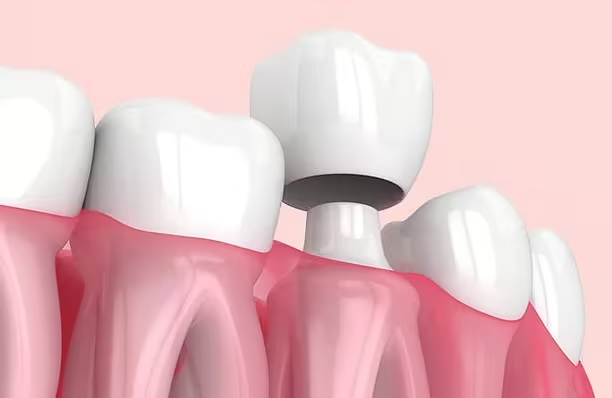
Pressed Ceramic Crowns
Pressed ceramic crowns have a strong ceramic base with several layers of porcelain on top. These crowns are made by pressing melted ceramic into shape, giving them a natural tooth-like appearance.
Best for:
Front and back teeth where a natural look is important.
Downside:
Can still chip over time, like PFM crowns.
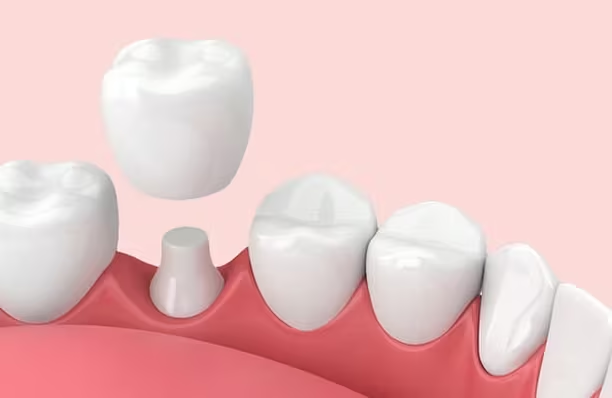
All-Ceramic or All-Porcelain Crowns
All-ceramic or all-porcelain crowns offer the best match to natural teeth. They are also a great option if you have metal allergies. Popular types include zirconia crowns, which are very strong and long-lasting, while also being gentle on other teeth.
Best for:
Front teeth or people with metal allergies.
Downside:
May not be as strong as metal for back teeth under heavy pressure.
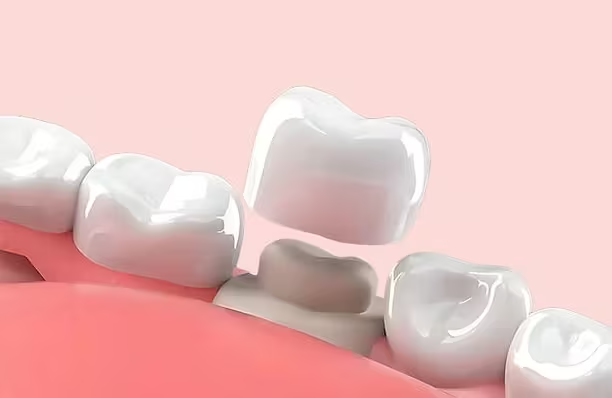
Same-Day Crowns (CAD/CAM Crowns)
Some dentists use CAD/CAM technology to create same-day dental crowns right in their clinic. They use a digital scanner and a special machine to design and make the crown in one visit.
Best for:
People who want quick treatment without multiple appointments.
Downside:
May not be suitable for everyone or every type of dental issue.

All-Resin Crowns
Resin crowns are made of a plastic-like material. They are usually less expensive but also less durable than other types. Dentists often use them as temporary crowns while a permanent one is being made.
Best for:
Temporary use or short-term needs.
Downside:
They can crack or wear down faster and usually last 3 to 5 years.
Steps Involved in Getting a Dental Crown
Getting a dental crown is a multi-step process that usually takes place over two dental visits. Each step is carefully planned to ensure your crown fits well, looks natural, and lasts for many years. Here’s what you can expect during the dental crown procedure.
Stage-1: Dental Examination and X-rays
Your dentist will begin by thoroughly examining your mouth to check the condition of the tooth that needs a crown. Dental X-rays are taken to look at the roots of the tooth and the surrounding bone. This helps your dentist detect any signs of decay, infection, or bone loss, and determine if additional treatments like a root canal are required before placing the crown.
Stage-2: Tooth Cleaning and Shaping
Next, the tooth is cleaned and reshaped to make room for the crown. The dentist will remove any decay or damaged parts and file down the tooth’s surface to create the proper shape for the crown to fit securely. If a large part of the tooth is missing, your dentist may use filling material to build it up so it can support the crown.
Stage-3: Taking Dental Impressions
Once your tooth is shaped, your dentist will take an impression or digital scan of the prepared tooth and the surrounding teeth. This impression is sent to a dental lab, where your custom-made crown is created to match the color, shape, and size of your natural teeth. This ensures your tooth crown blends in seamlessly with your smile.
Stage-4: Placing a Temporary Crown
While your permanent crown is being made, your dentist will place a temporary crown to protect your tooth. This crown is made from acrylic or resin and is not as strong as the final one, so it’s important to avoid chewing hard or sticky foods during this time. The temporary crown helps maintain function and appearance until the next visit.
Stage-5: Fitting and Cementing the Permanent Crown
At your second appointment, the custom-made crown will be ready. Your dentist will remove the temporary crown and check the fit, shape, and color of the permanent one. Once everything looks and feels right, the crown is cemented securely onto your tooth using strong dental adhesive. Your dentist will make final adjustments to ensure a comfortable bite.
Benefits of Dental Crown vs. Risks of Avoidance
Benefits of Dental Crowns
- Restore the natural shape and function of damaged teeth.
- Protect weak teeth from breaking further.
- Improve the appearance of discolored or misshapen teeth.
- Provide support for a dental bridge.
- Cover dental implants to complete the restoration.
- Boost confidence with a healthy-looking smile.
Risks of Not Getting Dental Crowns
- Weakened teeth may break or wear down faster.
- Damaged or decayed teeth can lead to infections.
- Missing or broken teeth can cause bite issues.
- Untreated teeth may require extraction in the future.
- Gaps left by broken teeth can lead to shifting of nearby teeth.
Do’s and Don’ts After Getting Dental Crowns
Do’s
- Brush and floss daily to maintain oral hygiene.
- Visit your dentist regularly for checkups.
- Use a nightguard if you grind your teeth.
- Follow your dentist’s aftercare instructions carefully.
- Eat a balanced diet to support dental health.
Don’ts
- Don’t chew on hard items like ice or pens.
- Don’t use your teeth as tools.
- Avoid sticky and very chewy foods.
- Don’t skip dental appointments.
- Don’t ignore pain or discomfort near the crown.
Myths and Facts About Dental Crowns
Dental crowns are a popular and effective way to restore damaged teeth. However, many misconceptions still linger. Below, we debunk common myths and present the facts on crowns.
Myth: Dental crowns don’t look natural.
Fact:
Modern dental crowns, made from porcelain or ceramic, closely resemble natural teeth in color, translucence, and texture. Even metal crowns, typically placed on back molars, remain invisible during normal use.
Myth: Crowns last forever.
Fact:
While dental crowns are durable, they are not permanent. With proper care and regular check-ups, they typically last 10 to 15 years—sometimes longer. Longevity depends on the material, oral hygiene, and bite habits.
Myth: Crowns Resist Staining.
Fact:
Crowns made from porcelain or ceramic resist stains from beverages like coffee or tea. However, they cannot be whitened. If you plan to whiten your teeth, it’s best to do so before crown placement to ensure a proper color match.
Myth: Crowns Are Only for Damaged Teeth.
Fact:
Beyond restoring broken or root-treated teeth, dental crowns also serve cosmetic purposes. Dentists use them to enhance the appearance of discolored, misshapen, or uneven teeth.
Myth: Crowns Cannot Chip or Break.
Fact:
Although strong, crowns can chip or crack if stressed—for instance, by biting on ice or pens. Avoiding such habits and using night guards for grinding can protect your crown.
Myth: A Crown Prevents All Future Cavities.
Fact:
The crown itself does not decay, but the underlying tooth can still develop cavities—particularly at the crown margins. Maintaining proper oral hygiene is essential to prevent cavities under the crown.